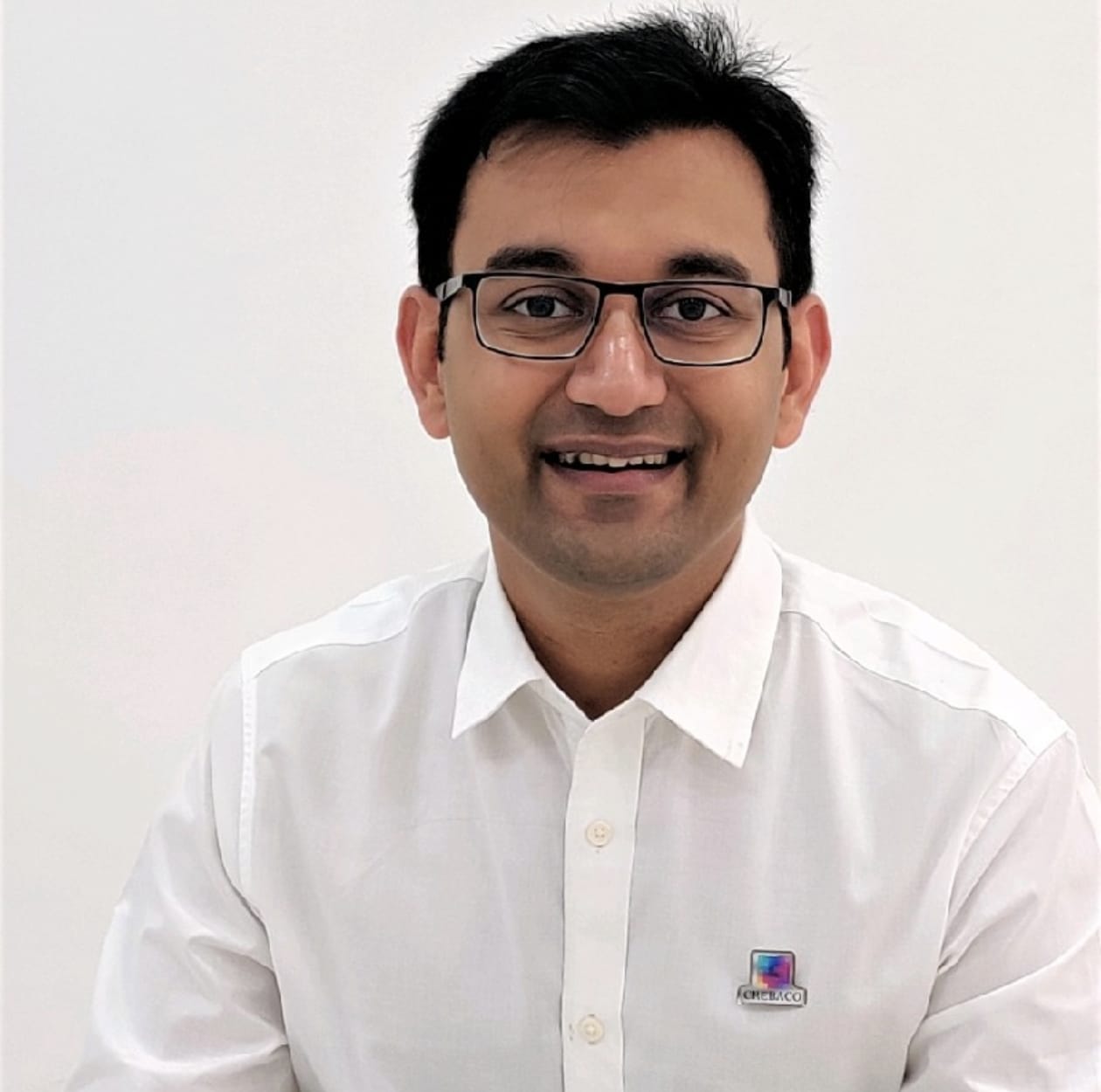
 As the Middle East strengthens its position in global finance and digital assets, the Gulf is emerging as a key destination for institutional capital, crypto businesses and financial innovation. In an exclusive interview with The Gulf Post, Sidharth Sogani, Fund Manager at Blue Aster Capital and CEO of CREBACO Global, shares his perspectives on the region’s growing influence, Bitcoin’s outlook into 2027, the rise of asset tokenisation and stablecoins, and what investors should watch across global market.
Q1. The Middle East is being called the world's new financial and digital-asset hub. How real is this shift, and what is driving it?
It is very real, and it is structural rather than cyclical. More than 100 firms now hold virtual-asset licences across the UAE's five regulators, and MENA crypto trading volumes grew 85% year on year in the first quarter of 2026. What makes this boom different from earlier ones is the regulation behind it: VARA in Dubai, the ADGM framework in Abu Dhabi and the new federal Capital Market Authority. Neighbouring countries such as Bahrain also have sovereign-level regulation, which builds trust across the entire Gulf market. Institutional capital needs that clarity before it commits, and combined with sovereign capital and favourable tax treatment it is why global exchanges, funds and talent are relocating here rather than just visiting.
Q2. Are Gulf sovereign wealth funds genuinely embracing digital assets, or is this mostly retail-driven enthusiasm?
This is the most under-reported story in regional finance. Abu Dhabi's Mubadala held roughly $566 million in Bitcoin ETFs at the end of March 2026, and it kept adding even through the recent crypto slump rather than retreating. When a sovereign allocator with a multi-decade horizon commits capital through public disclosures, it validates the asset class for every family office and pension fund watching from the sidelines. This is patient, oil-backed capital, not speculative retail money.
There is also a practical side. Whenever institutional money moves, it moves in structures. You need a fund administrator, a custodian, a regulator and a bank, and all of them must be crypto-friendly. In the UAE most service providers now support crypto, which makes it an easy choice for a fund to relocate here. Yes, banking is still a challenge, but that is true everywhere.
Q3. Beyond crypto, what is the biggest structural growth opportunity for the region over the next few years?
Real-world asset tokenisation and the fintech build-out around it. Consultancy estimates put the GCC tokenisation opportunity at close to $500 billion as real estate, commodities and sukuk move on-chain. The fintech ecosystem has scaled fast too: the UAE hosts more than 1,600 active fintech firms, and Saudi Arabia's fintech sector has grown thirty-fold in seven years to over 300 players. Add the new Dubai Gold District, and you have a region diversifying well beyond oil into financial infrastructure itself.
One thing is important to understand. Institutional money may not originate in the GCC, but it certainly moves through the GCC. If a family office in the Far East wants to invest in US markets, it can use structures from this region to do so. The money is already moving.
Q4. Why are so many crypto entrepreneurs and traders, particularly from India, choosing to relocate to the Gulf?
It comes down to three things: tax treatment, regulatory clarity and access to capital. India's 30% flat tax on crypto gains, plus 1% TDS on every transaction, has pushed volumes and entrepreneurs offshore, while the Gulf offers a zero-to-low personal tax environment and a clear licensing path. Having run a crypto research firm for about ten years, I have watched this first-hand. What was a trickle of relocations five years ago is now a steady, institutional flow of funds, exchanges and family offices setting up regional headquarters in Dubai and Abu Dhabi.
The UAE has also created what I call a Beehive Effect in crypto. If I run a crypto firm and need to hire, I can find talent easily from competitors or other crypto firms. That does not happen in a country with few or no crypto firms. Ecosystem strength takes time to build, but once it is there, paying a little extra to be in that market is totally worth it.
Q5. Bitcoin has been volatile this year. What is your honest read on where crypto is headed into 2027?
We have to look at the entire crypto market cap. It is hovering around $2.7 to $2.8 trillion, against a peak of roughly $4.3 to $4.4 trillion in October 2025. What changed? Altcoins lost heavily. That market was overvalued, a lot of pump-and-dump activity took place, and it sucked away most of the liquidity. We also cannot ignore 10 October 2025, known in the crypto world as 10-10, when many liquidity providers lost their capital.
If you look at past crypto cycles, it takes about 52 to 54 weeks to get back to the liquidity zone, and right now we are absolutely there. We saw serious traction in Bitcoin over the last few weeks, with the price moving from the low $60,000s to around $80,000 in no time. I believe Bitcoin has about a 90% chance of reaching its all-time high of $126,000 before December 2026. The US midterm elections will also make a big difference.
The bigger point is who controls this market. Crypto is still small, and Bitcoin has a limited float, because millions of coins are lost forever or sit in whale wallets. So whoever holds the liquidity sets the price. Today most of that liquidity sits in derivatives, where 50x or even 100x leverage is available, while spot is increasingly driven by ETFs. US spot Bitcoin ETFs have taken in more than $57 billion since launch. Traditional finance is bringing Bitcoin into its own system, and until Bitcoin gets much bigger, perhaps around $300,000, I believe Wall Street will keep control of liquidity.
Q6. Tokenisation of real-world assets keeps coming up as the "real" crypto story now. Do you agree?
Not at all. Crypto gets new terminology every cycle: ICOs, DeFi, NFTs, AI agents, memecoins, ZK proofs, Layer 2s, multichain and so on. Now the narrative is RWA. It is good, it seems to have a longer run and it is surely here to stay. On-chain RWA value has grown from roughly $21 billion at the start of the year to about $39 billion today, and industry forecasts see the broader tokenised-asset market scaling from about $256 billion in 2025 toward $419 billion within a few years.
This is the part of crypto that institutions actually want exposure to. Tokenised real estate, sukuk and treasury products settle instantly and transparently, rather than through the multi-day frictions of traditional custody. For a region sitting on trillions in real estate and commodity wealth, it is arguably a bigger long-term opportunity than Bitcoin itself.
However, the whole concept of crypto is decentralisation, borderless, peer-to-peer and transparent. In RWA, traditional custodians, service providers, trusts and funds are all involved. I would say RWA is something like a layer two on crypto. Crypto is by itself a story, not a narrative.
Q7. What is the most underappreciated risk facing crypto investors right now?
Quantum computing. It sounds futuristic, but it is closer than most investors assume. In April 2026 a researcher broke a 15-bit elliptic-curve cryptography key using publicly accessible quantum hardware, and peer-reviewed analysis now describes the threat to Bitcoin and Ethereum's underlying cryptography as real and broad-based, but bounded and largely mitigable. Serious industry players are already engineering quantum-resistant defences. It is not a five-year problem, but any serious allocator should be asking their custodians about migration plans today.
Q8. Equities are near record highs even amid rate uncertainty. Is this rally sustainable, or are we in bubble territory?
Both things are true at once, which is what makes this market hard to read. The S&P 500 is near record levels, around 7,600, and earnings this season have been very strong. At the same time, the Federal Reserve raised rates in September for the first time since 2023, US inflation is running at 3.7%, and there is real worry that the AI-driven rally is concentrated in a handful of mega-cap names. With the Fed meeting this week, the Bank of Japan right after it and the US midterms next week, uncertainty is high.
One more thing investors should keep in mind: today's markets are largely derivative-driven. Indices, gold and crude all trade heavily through futures and options, which let participants speculate with leverage. The headline price you see can therefore move away from the value of the underlying asset. My advice is to stay invested, but diversify away from single-theme concentration, and keep some cash ready.
Q9. Gold has been on an extraordinary run and has now corrected. Where do gold and silver go from here, and how should investors position?
Gold hit a record above $5,400 an ounce in January and is now around $4,000, roughly 25% lower. Silver is near $54, against a record of about $121. Many people ask why gold is falling if the world is so uncertain. In my view it is not a failure of fundamentals. It is a liquidity story.
Before almost every recession or major equity correction, gold has tended to make an all-time high and then start correcting, even before the recession actually kicks in. I have observed this over several decades. The reason is simple. When stocks fall, people start looking at the discount. If you can buy Apple or Microsoft at 25% off, you will sell your gold, silver or fixed deposits and move the money into the stock. Institutions raise cash the same way and then re-enter after the fall. That creates selling pressure on gold, and it has little to do with the metal itself.
There is a second factor. Gold markets today are derivative-driven, as are all major indices. Derivatives let you speculate with leverage, and the price they show can be very different from the actual price of the underlying asset. We see the same thing in crude. Brent futures trade around $100 to $115, yet physical crude has at times been 20 to 25% higher than the futures contract. It is very difficult to ascertain the true market price when it is shaped by derivative contracts.
So what should an investor do? Stay flexible. Use a core-satellite approach. Keep a strategic 5 to 10% in gold within the core, with quality stocks and bonds, and let the satellites rotate rather than getting stuck on one idea. Silver belongs in the satellites, since it is more volatile and more tied to industry. Buy in stages, keep some cash and expect volatility.
Q10. Trending Topic 1: Could the Gulf become the world's de facto "gold and crypto reserve corridor"?
This is a genuinely interesting angle for readers. An estimated 13 to 15% of globally traded gold passes through Dubai, most of it through DMCC, and the city is now building a dedicated Gold District to formalise that position. At the same time, sovereign wealth funds in the Gulf are quietly building Bitcoin positions. The region is becoming the one place comfortable holding both the oldest store of value and the newest, at scale. Short term, as I said, gold can correct for liquidity reasons, but the long-term case behind that dual bet remains intact.
Trending Topic 2: Stablecoins have quietly become the biggest story in crypto. Why should Gulf readers care?
Because stablecoins have moved from a trading tool to real payments infrastructure that touches trade finance, remittances and treasury management right here in the Gulf. Total supply has grown from about $5 billion in 2020 to roughly $300 billion today, and the market is forecast to grow from about $0.33 trillion to $1.16 trillion by 2031. Regionally, Gulf trade corridors under shipping and geopolitical stress have started leaning on stablecoins as a faster settlement rail than traditional banking. In effect, dollar-pegged tokens are beginning to replace parts of the correspondent banking system.
There is a Wall Street angle too. Regulated stablecoins such as USDC, and the tokenised deposits that large US banks are launching, add to traditional finance's influence over crypto. For business owners and investors, the practical point is that stablecoins are reshaping how money actually moves through this region, not just how it is traded.

.jpg)